VIOLETS – ONE OF THE SWEETEST LGBT+ WEDDING TRADITIONS
“Violets are a symbol of pride. And I love that they are slowly but surely becoming a wedding tradition that bisexual and gay women can call their own.“
LGBT+ wedding traditions
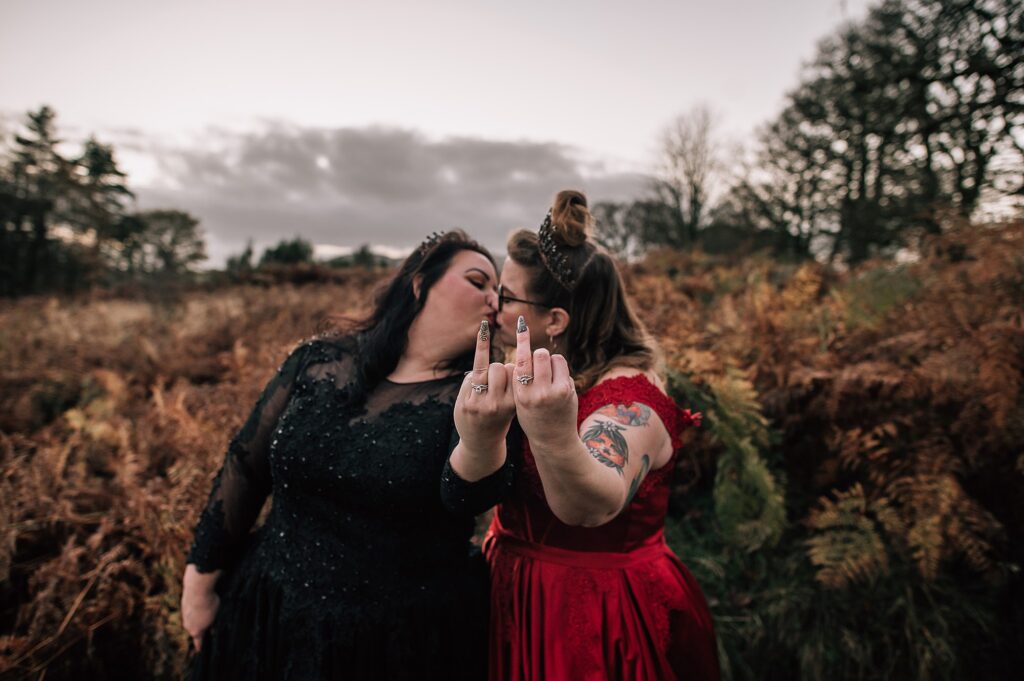
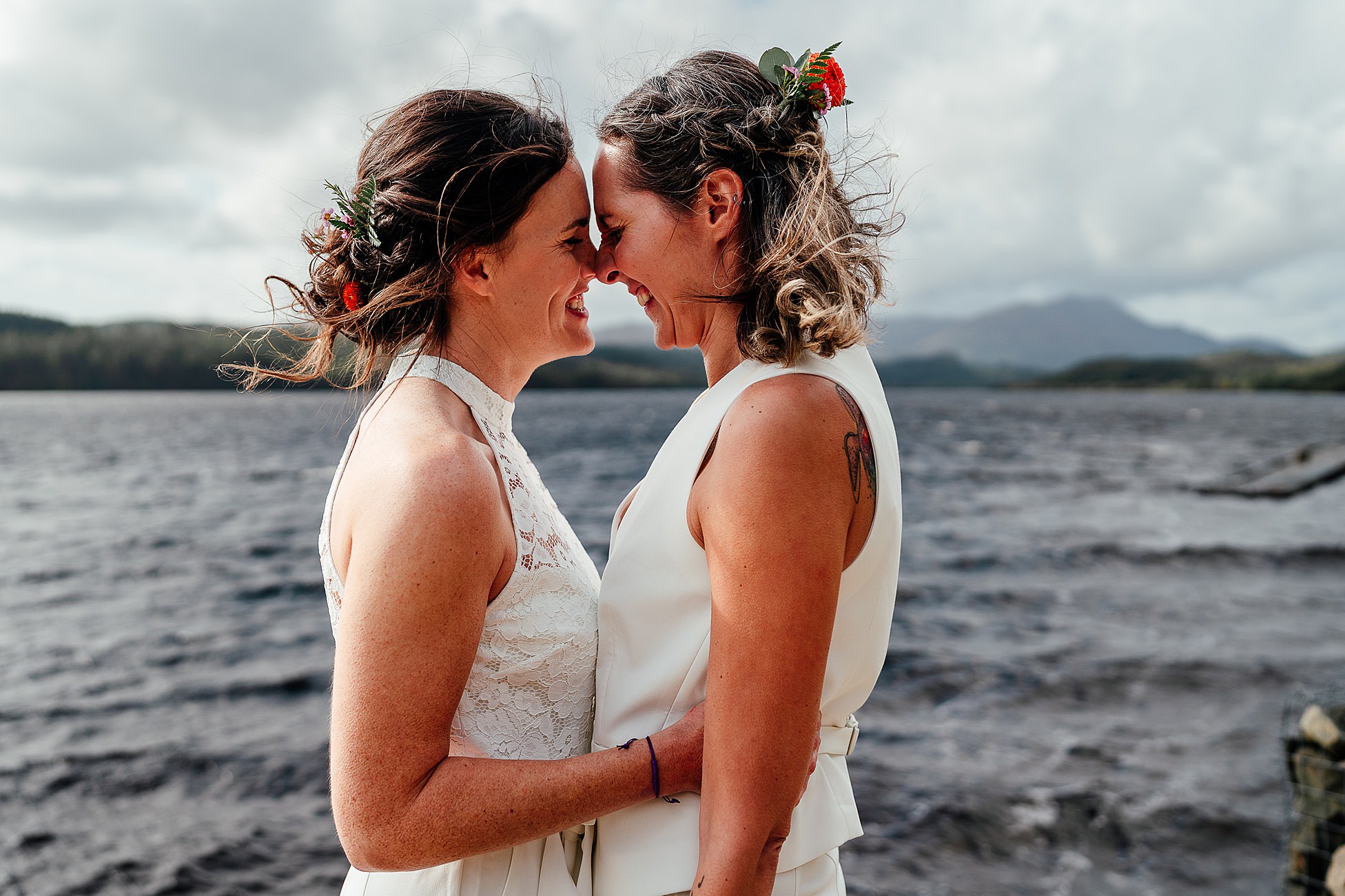
“There aren’t any wedding traditions for lesbians”, my betrothed couple Emily and Jag told me.
Thankfully, that’s not true anymore. Because, after their frustrated lament, I suggested they start their own tradition. Something that could be passed down through generations so that when queer women of the future are planning their wedding, they can look back and take inspiration from the lesbians of today.
As a Humanist celebrant, I’m all about couples making their wedding their own. But I also know that history and tradition matter. The symbolic elements of a ceremony are so important. They can anchor you to the past as well as to your shared future.
After some thought Emily and Jag chose to exchange violets – in their case, violet brooches tied around each other’s wrists with violet ribbon. Why violets? Read on to find out…
VIOLETS AND QUEER HISTORY
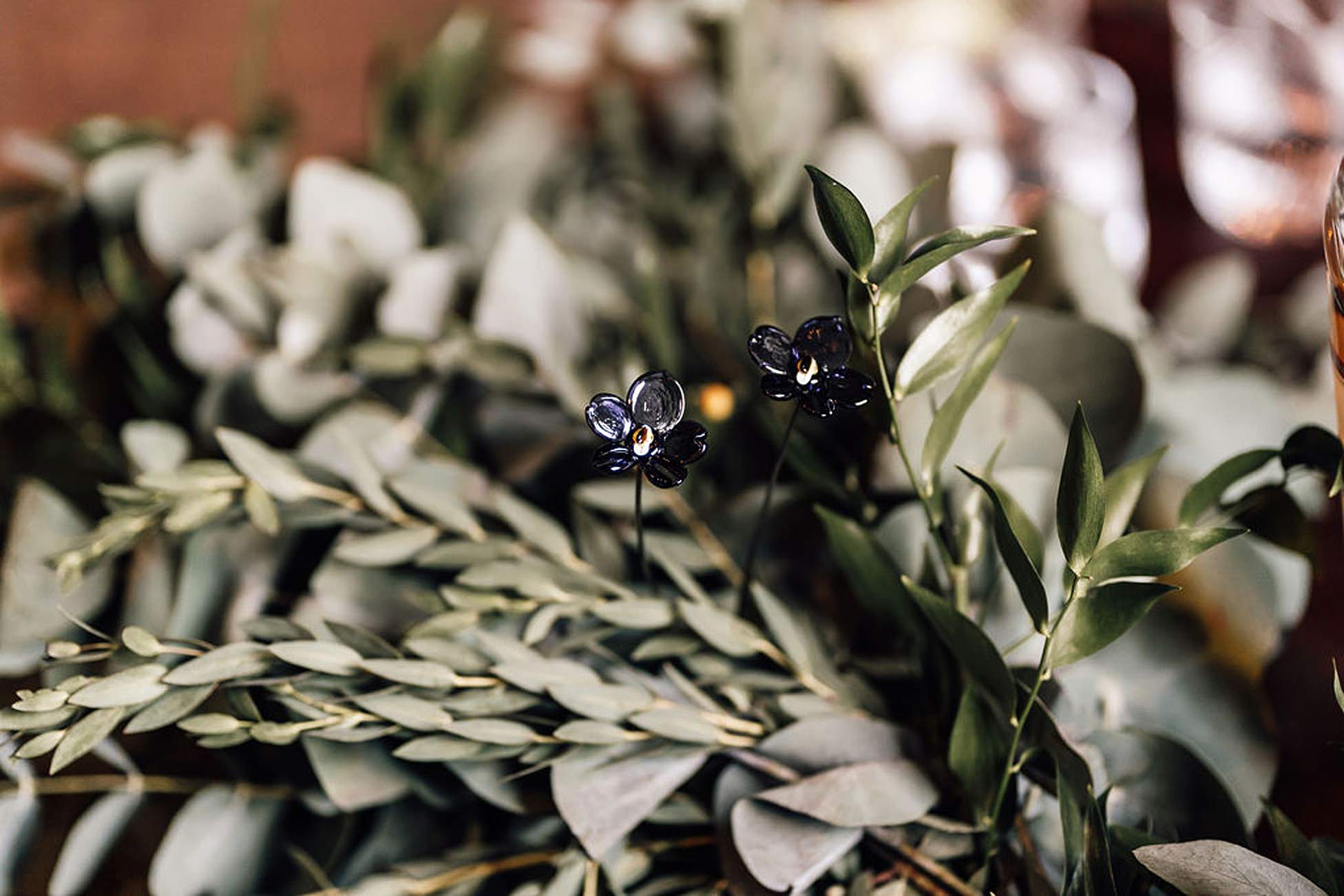
Violets have been a lesbian symbol as far back as Ancient Greece. The Greek poet Sappho (who lived on Lesbos) would describe girls adorned in flowers, with violet garlands around their necks.
In the 1920s, Édouard Bourdet wrote of a secret lesbian relationship in The Captive. Within the play, the couple sent violets to each other, and female audience members began to show up night after night wearing sprigs of violet pinned to their lapels. Over the years violets became a way for women to subtly tell other women they were, you might say, ‘sapphically inclined’.
As Emily and Jag told me, “We weren’t too keen on the idea of wedding rings, so exchanging violets was the perfect way to still have a symbolic gesture as well as honouring the queer women who came before us.”
Back in ‘the olden days’ – and we’re not talking ancient history here, just mere decades – women couldn’t be out and proud. Meeting a special somebody is difficult enough, even when the consequence of a knock-back is just a feeling of embarrassment. Now imagine wanting to meet someone but having no idea if you were, for want of a better phrase, ‘their type’.
A violet ribbon around the wrist, or a wee sprig of violets, was the best way to communicate that you were a ‘lavender menace’. It was a relatively ‘safe’ way to communicate who you were and who you loved.
HUMANIST WEDDINGS FOR LGBT+ COUPLES
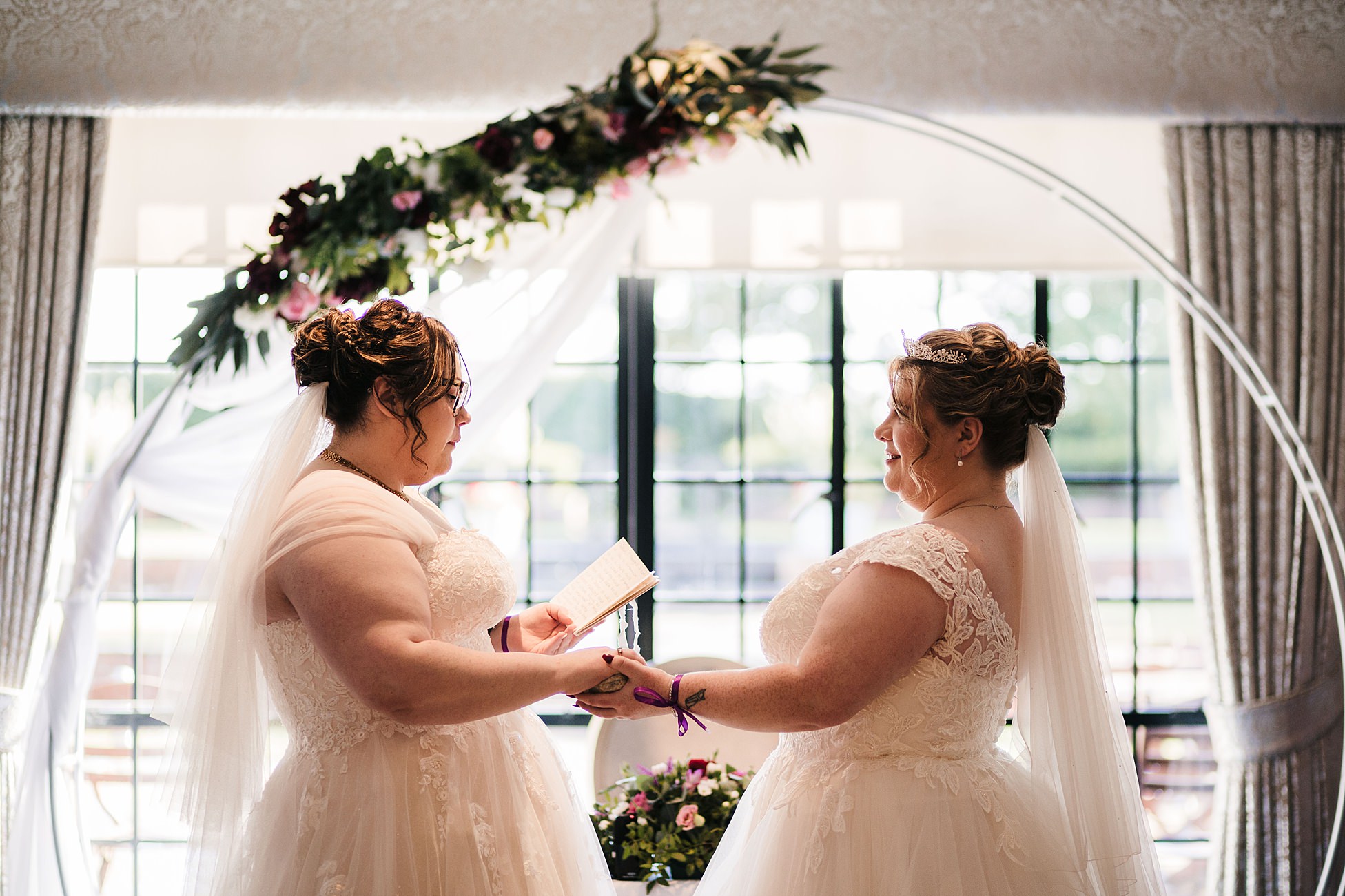
Now, just over a decade since the first same-sex marriage took place, violets are a symbol of pride. And I love that they are slowly but surely becoming a wedding tradition that bisexual and gay women can call their own. Violets are no longer a ‘secret sign’. No longer a statement of a hidden identity. They’ve become part of something beautiful, two women celebrating their love for each other.
I’ve spent many years conducting Humanist wedding ceremonies and one of my favourite things is seeing which traditions couples choose to include, which of these little nods back to history mean something special to them. I also love including symbolic acts that have been made up by the couple, but that you suspect may go on to form part of family lore. Something that seems, to outsiders, ever-so small and perhaps insignificant can actually be hugely important within a relationship. Sharing a jam sandwich with your new husband in memory of your nana who always made them for you on a Saturday afternoon? What a perfect way to start married life. Enjoying an empire biscuit together to symbolise the sweetness of the life you share…delightful.
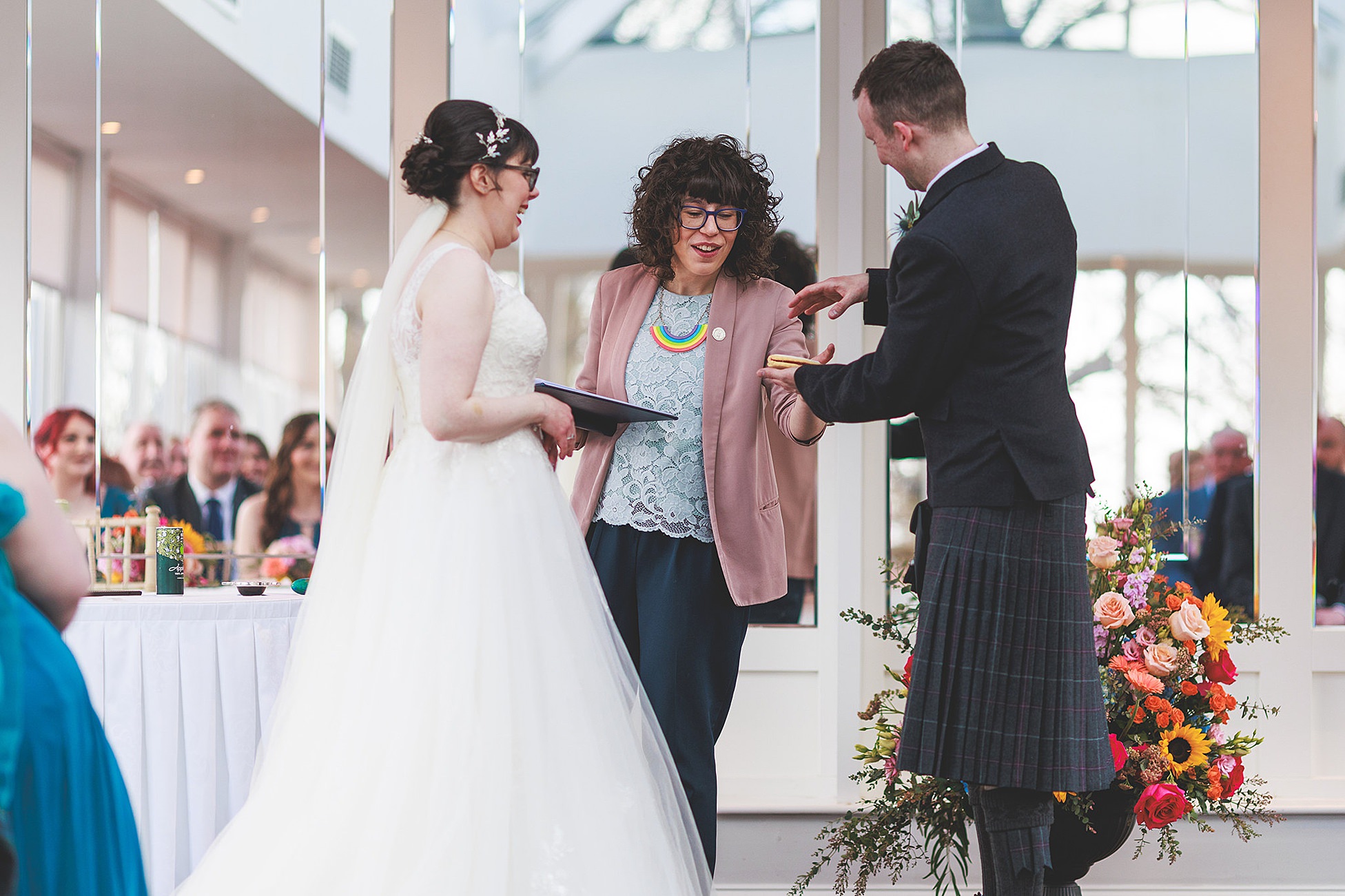
Whether it’s a twist on tradition – like tying the knot with old bicycle inner tubes your late dad kept because they “are good for joining things together” – making up something new, or giving a little tip of the cap to the past, your wedding should be a celebration of who you are and where you’ve come from.
So, if who you are is a woman marrying a woman, why not give a nod to those lesbians of history by adding some violets to your ceremony?